
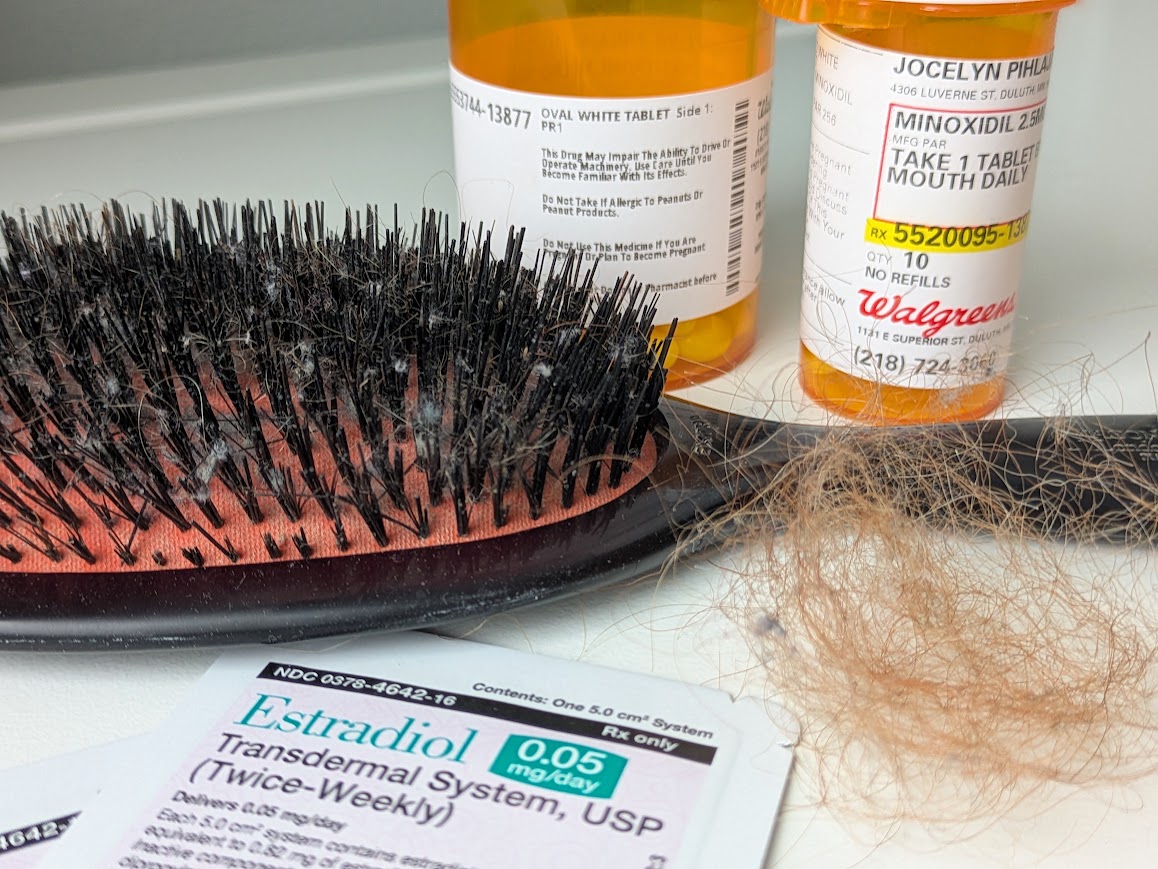
Unfortunately, the dramatic reaction to the results of the Women’s Health Initiative study changed the landscape of Menopause Hormone Therapy education, with doctors deciding, often literally overnight, to stop prescribing and medical schools removing instruction from the curriculum. According to Jennifer Roelands, M.D., board-certified OB-GYN, and certified integrative specialist, “We only talked about menopause once or twice in the entire four years that I was in residency. The conversation was, ‘You don’t need to memorize hormone replacement therapy because you’re not going to prescribe it’” (https://honehealth.com/edge/womens-health-initiative-study-impact-menopause/).
As education and access dwindled, a generation of women suffered—hot flashes, night sweats, brain fog, insomnia, low libido, all were dismissed with a shrug and advice to exercise and eat well. Twenty years after the misinterpreted WHI study results were blasted in the headlines, women like me, fully trusting their physicians’ guidance, had no idea MHT was an option, no idea their bodies and brains could feel better, no idea they needed to teach themselves about hormones and self-advocate. There was no way for us to know what we didn’t know.
As is often the case with women’s bodies, knowledge had to pass through word of mouth—or, in 2025, through texts and social media, through dms, through friends, through cousins—before change could happen.
After receiving the message from my cousin’s wife pushing me to consider MHT for myself, I read the WHI study, sifted through the Menopause Society’s guidelines, watched the videos of doctors promoting the adoption of hormones, weighed the information in physicians’ blog posts and newsletters.
I made an appointment.
My primary physician and I have had a relationship for 24 years. I like her. I respect her. In her care, I feel safe and heard. But the day I sat in her office and asked for MHT, it felt like we were speaking two different languages.
In truth, we were. She was speaking the prescriber’s language of caution and “We don’t have good data” whereas I was speaking a longing, emerging language of “Avoidance of MHT is unjustified, and in the data that does exist, it appears hormones could be protective for a menopausal woman my age against osteoporosis and all-cause mortality.”
Despite our diverging points of view, she listened to my request. I asked for transdermal estrogen and micronized progesterone. She noted I didn’t have vasomotor symptoms that would merit the prescription of these hormones.
“Yeah, but I’d like them for preventative reasons, like osteoporosis. And it seems like there’s some data about MHT to support lower incidence of colorectal cancer and cardiovascular disease.”
She winced as I spoke, her head bent over the notes she was jotting. “Hmmm, some of that’s questionable, but it’s true estrogen can help guard against osteoporosis. However, you lift weights, so you’re already doing that.”
“Is it possible to protect too much against osteoporosis?” I countered. “And what if I have stretches when I’m unable to lift weights, like after a knee replacement?”
Okay, sure, she agreed. She would prescribe three months of a low dose of oral estrogen and progesterone, following the traditional guidance of “as low a dose as possible, for as short a time as possible.”
“Well,” I countered, “like I said, I’d like transdermal estrogen, not oral, and I’d like to be on it long term.”
Her lips scrunched. “You don’t want transdermal; it’s fussy, like messing around with Band-Aids. Women don’t like that and tend to stop using them.”
“I feel like I won’t mind that fussiness. I’d like to try transdermal, please,” I insisted, my resolve to appreciate transdermal patches hardening at the hint of an objection.
Picking up the thread, she added, “And you can’t be on these hormones long-term. It’s ‘the lowest dose for the shortest time possible.’”
Knowing I was coming across as faintly oppositional, I dared again to disagree. “I don’t think it needs to be that way. The landscape of hormones has changed in recent years, right? I have a nurse friend who’s been on transdermal estrogen and oral progesterone for more than 15 years, and she has no intention of stopping, so long as she feels better on them than off. The way I’m thinking of it, the idea with today’s hormones isn’t always about treating symptoms; they can be long-term preventive care. So I’d like to try them and stay on them as long as it feels right.”
A flurry of expressions crossed the doctor’s face as I talked. I could see she didn’t agree. But also, I could see she was trying. For her as a prescriber, looking at a patient without hot flashes or night sweats, the idea of long-term MHT felt ill advised. Ethically, she couldn’t go beyond a short-term, low-dose prescription.
“Okay,” she conceded, “I’ll put in the order for three months of transdermal estrogen and cycling oral progesterone. But that’s all.”
“Actually—” self-advocacy takes moxie “—I am also interested in a prescription for vaginal estrogen.”
It was a request too far. The words barely exited my mouth before she shook her head. “No. You can’t be on both vaginal and transdermal estrogen. The risks are too big.”
I’d been nervous throughout the conversation, but this response irked me. What? I knew she was wrong, and that realization undermined the entirety of our conversation.
Hastening to clarify, I stammered, “I’m not talking about a systemic estrogen administered vaginally; I’m talking about topical, non-systemic skin-care estrogen—it’s like a lotion to keep the vaginal tissues healthy, and it can help the bladder, too.”
“I won’t prescribe it.” She was firm. “You can’t be on two kinds of estrogen.”
“I think I can.”
“No, you can’t.”
“I am sure I can.”
“Well, you can’t.”
When I was younger, the charged feeling of a playground argument would have had me fighting tears, but at 57, I found the impulse to cry was overridden by annoyance. Really? A seasoned general practitioner was denying a post-menopausal woman vaginal estrogen?
Fortunately, I had entered the room with a back-up plan. “Okay, since we disagree, I have one more request. Would you be willing to write a referral for me to a doctor who specializes in hormones? Apparently, she’s the only doctor in Duluth who’s a member of the North American Menopause Society, and I’d like a chance to see what she says.”
I waited a beat while my doctor nodded. Then I added, “And I’m 100% sure she’ll prescribe vaginal estrogen.”
(Part Three coming tomorrow!)
Leave a Reply