
I warned him the ending had made me sob. I also warned him it might not be his kind of book, especially given the emotional weight he’s been carrying this past year as his dad entered memory care, and his sense of the shortness of life lodged as an acute, buzzing ache.
Nevertheless, Byron decided to give When the Cranes Fly South a chance.
For a week or two, he carried it around the house with him, reading at the kitchen counter, on the chaise longue, out on the back balcony. I didn’t ask him if he was enjoying it. He didn’t tell me how it was hitting him.
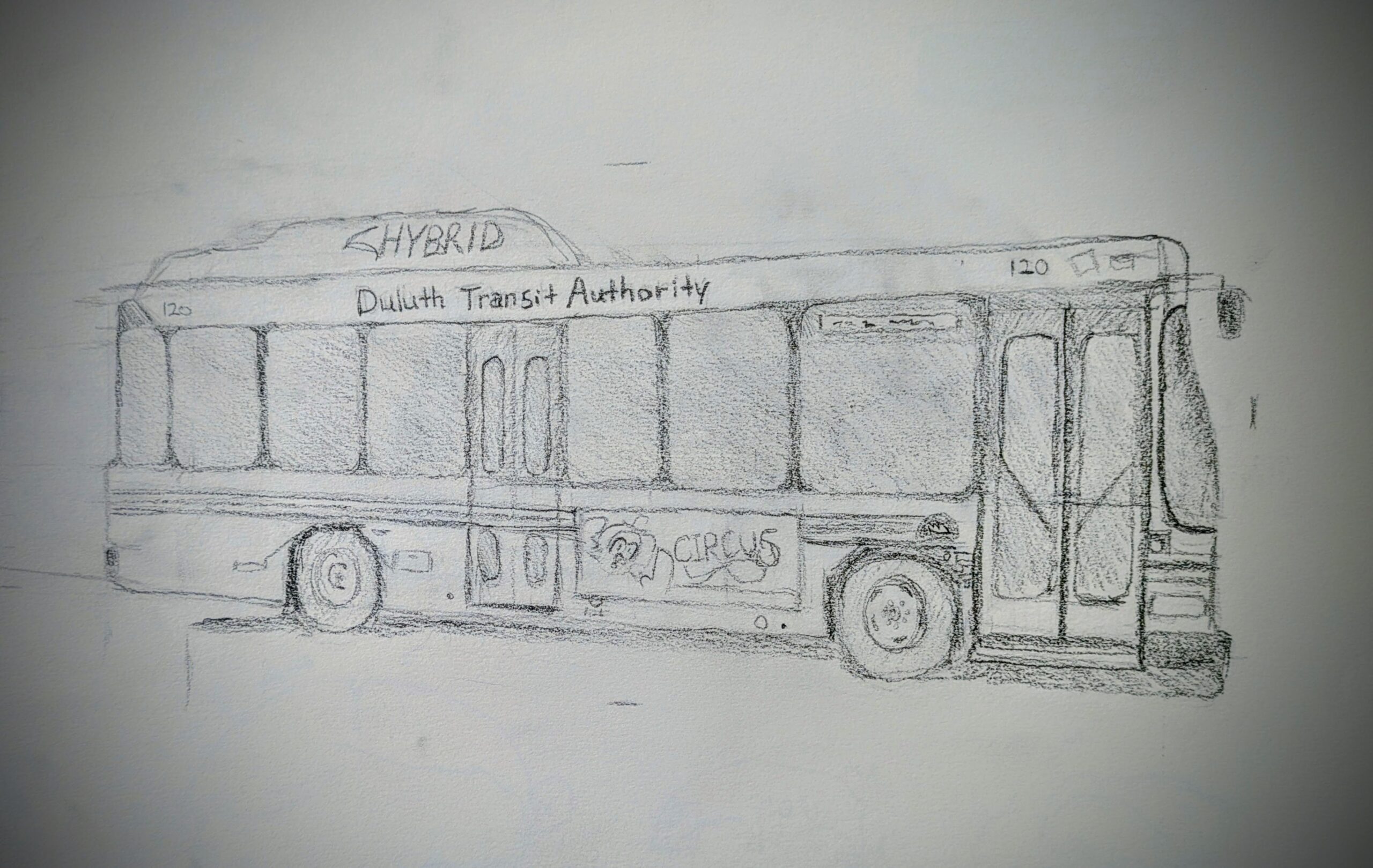
Then, on the third day of the worst wildfire smoke either of us had ever experienced – a front of toxins that wafted through the open windows of the house in the middle of the night, imbuing rugs, upholstery, clothing with the scent of bonfire, a wave of smell and fug that permeated the filter of Byron’s CPAP and pulled him to consciousness with a pounding alarm of “THE HOUSE IS ON FIRE” – on that third day of living in a dystopian haze, a day AQI levels topped 1000, he took the book onto the bus to read on his way to work. With an N95 pinched tight around his nose, his glasses lenses remained clear; using the unaccustomed free time of being a passenger instead of a bike commuter, he flipped closer to the resolution of the story of an old man nearing end of life.
When about twenty-five pages remained, a quick thought flitted through Byron’s head: “Jocelyn told me the ending cracked her. I’m not feeling anything like a big cry coming on, though? I don’t see what hit her so hard.”
However. The final scene came at him sideways.
As the bus swayed along Superior Street, he reached the last page, a poignant closure just skirting sentimentality. From nowhere, a wave of weeping overtook him. This was no momentary cry, either; the unexpected tears were a healthy wash of not only the sweetly devastating loss within the book – no less real for it being a fictional character – but also an outpouring of Byron’s own awareness that he, too, is ticking toward oblivion, a weight he carries through every hour, doubly heavy in a world on fire.
Cradled into the dip of a plastic seat, a faceless cog-in-the-system jouncing along inside a climate-controlled bubble floating through yellow skies, Byron took off his glasses to dab his eyes and dry the flow of tears moistening his mask. There were only a few more stops before he needed to pinch the nose pieces tight once again and hustle in to work to open the doors of the library, that haven for the vulnerable. Yet the story had taken him to a place where the ache of his own vulnerability – so raw, so tender, so sad, so scared – was pouring out in a deluge that showed no signs of slowing.
As he mopped at his face, Byron felt a tap on his shoulder. It was the woman in the seat behind him, one of the few people on the bus who valued herself highly enough to wear a mask; not only had she refused to internalize the messages about human disposability that underpin the ethos of a billionaire capitalist class intent on ruining the planet for their personal gain, she carried Kleenex.
In her hand was one for Byron. Even from behind, she’d perceived his emotions. As she tapped his shoulder, he turned, and she handed him the tissue and pantomimed wiping tears. Certainly, her reluctance to speak might have been due to the noise of the bus and the interference of the mask, but small cues from her appearance and way of being signaled that English might not be her first language. Her mask and compassion didn’t convey “American.”
Byron thanked her, dried his face, and began tucking the finished book into a bag, readying to exit the bus at the stop for the library. Later, he would describe the upside-down yellow-brown lungs-hurting squinting-through-a-miasma-of-smoke-while-all-the-world-carries-on-tra-la-la-ing days as “genuinely traumatic.” We’ve known climate collapse is coming; we’ve known half the people around us have chosen jut-jawed denial over acceptance of expert data; we’ve understood that the less supported an opinion is, the louder it’s pronounced.
But until those unprecedentedly terrible days of wildfire smoke – during which we saw people out running, sitting on restaurant patios drinking beers, smoking cigarettes while biking – we hadn’t fully realized that the majority of people around us inhabit an alternate reality. Until that week of sweating, sealed inside our hot house, or masking in public, agape at the brume of yellow air hovering above the indoor swimming pool at the YMCA, we’d been able to believe that the people we live amongst were, at the very least, invested in their own wellbeing.
We were wrong.
The resulting feelings of alienation and disappointment added duress to those days. So, in dire times, there really are only a small crew of people we can trust and respect? The community we rely upon during the worst days might actually be as small as 20-30 longtime friends and family members? That realization hit like a hoof kick to the gut.
But then.
In an unguarded moment on a murky day, Byron was reminded that goodness is everywhere; sometimes we just don’t know its name and address. The gesture arrived without a face, without words, in the form of a square of tissue and a quick nod – a need satisfied before it was expressed.
And for a brief, wonderful moment, his heavy heart lifted, and the skies cleared.
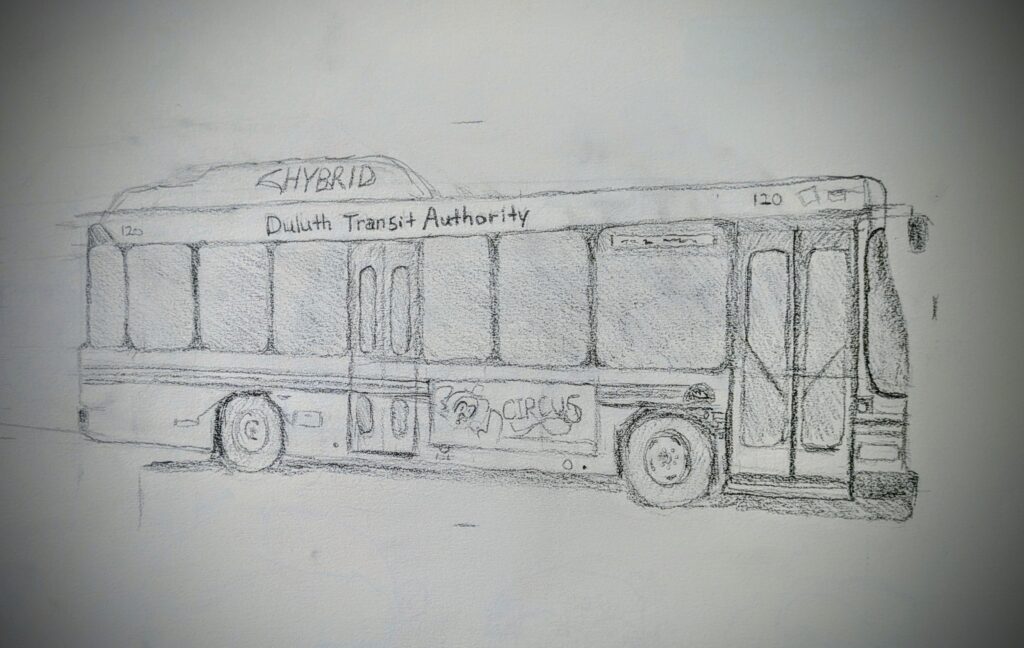
*Huge thanks and love to Haakon (aka Paco — although his pseudonym on this blog in the early years was Wee Niblet) for taking the time to create the charming bus drawings featured in this post

Leave a Reply